The inspection report is where the story usually breaks. A buyer under contract on a 1940s or 1950s bungalow in Avondale gets the callback from their inspector, and the word that comes up is either "Zinsco" or "Federal Pacific." Both are electrical panel brands that stopped being made decades ago because they have a documented history of breaker failures, and most lenders and insurers now want them replaced before closing. If the panel passes, the next flag is often polybutylene plumbing, a plastic pipe used widely in the 1970s and 80s that degrades from the inside and isn't covered by most home insurance policies anymore.
None of this makes Avondale a bad buy. It explains why the price looks so good in the first place.
Avondale's homes sit meaningfully lower on price than comparable square footage in Mount Pleasant or Daniel Island, and it's tempting to read that gap as a discount on the same product. It isn't. It's the cost of a defined, predictable renovation bill that almost every buyer in this neighborhood eventually pays, landing at a moment when a nearby corridor is about to receive one of the largest single investments West Ashley has seen in decades. Those two facts, not the list price alone, are what actually determine whether an Avondale purchase pencils out.
Why the Panel Box Keeps Coming Up
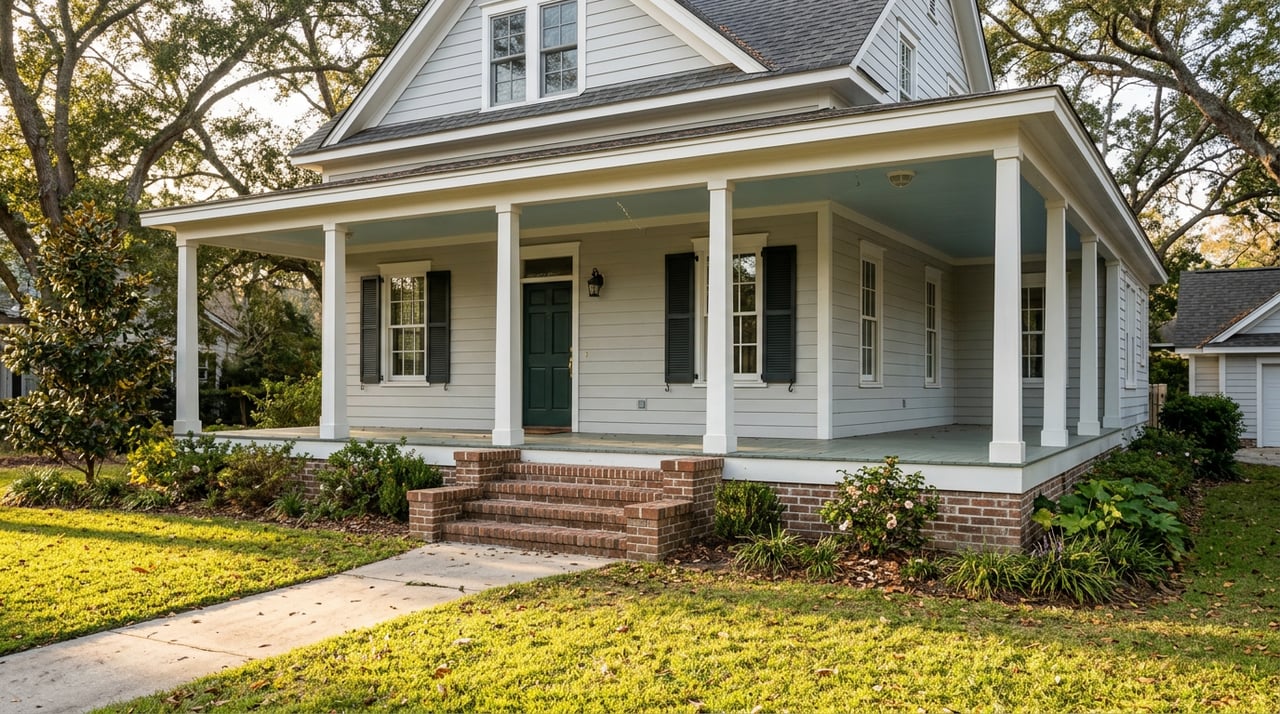
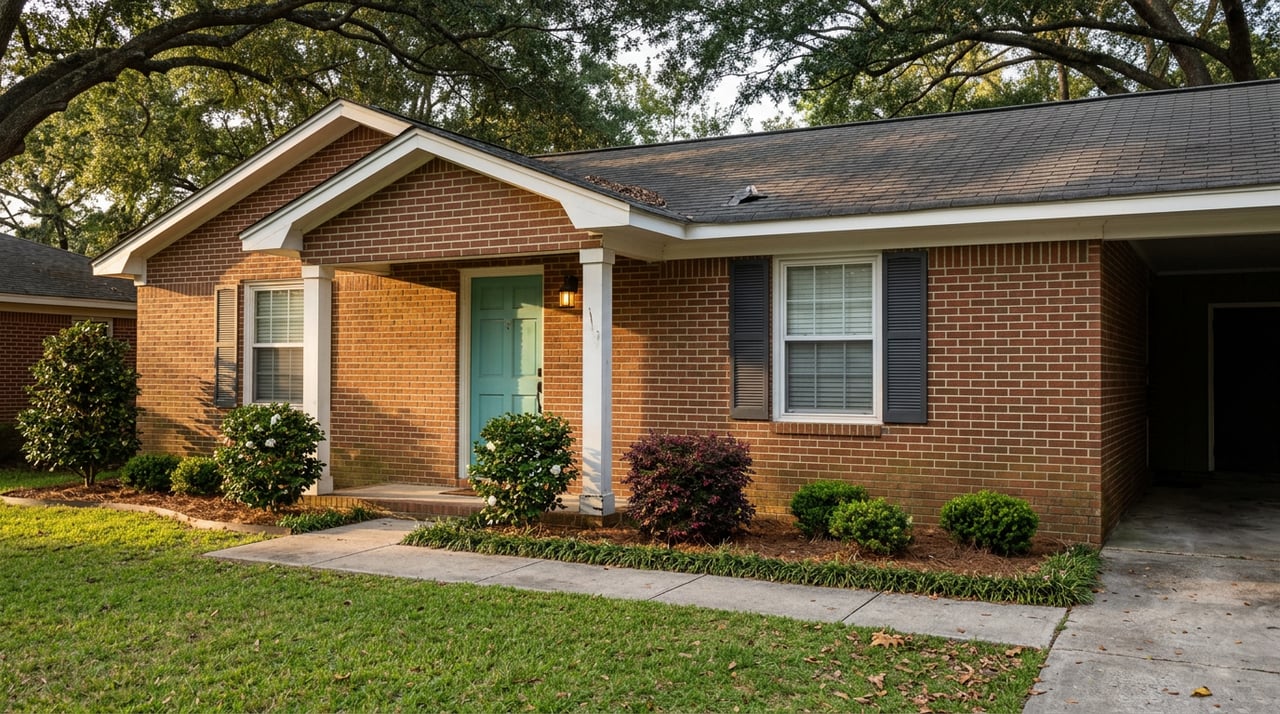
Avondale was built out largely in the 1940s and 1950s as one of Charleston's first suburbs beyond the peninsula, and the neighborhood still carries that vintage in its bones. Homes here range from about 950 to 3,000 square feet, most on generous lots with mature live oaks, and most finished originally in brick or aluminum siding. That's the charm buyers are drawn to. It's also why the systems underneath the charm are usually original.
A renovation contractor working extensively across West Ashley describes the pattern bluntly: homes from this era commonly carry outdated Federal Pacific or Zinsco electrical panels, aging polybutylene plumbing, older HVAC systems, and closed-off floor plans that don't match how people live now. Add to that foundation settling, thin insulation, and single-pane windows, and you have a fairly standard punch list that shows up on inspection after inspection, not because any one house was neglected, but because the whole neighborhood was built to a mid-century standard that nobody expects to still be running unmodified.
What the Renovation Actually Costs
The contractor's own numbers, drawn from West Ashley project history, give a buyer something more useful than a vague warning. Here's the range for the work that keeps recurring in Avondale specifically:
| Project | Typical Cost |
|---|---|
| Basic kitchen refresh (countertops, backsplash, paint) | $25,000–$35,000 |
| Mid-range kitchen remodel (new cabinets, layout change) | $45,000–$70,000 |
| High-end kitchen remodel (structural changes, premium finishes) | $75,000–$100,000+ |
| Whole-home systems package (open floor plan, master bath gut, windows, HVAC, plumbing) | $80,000–$150,000 |
That last line is the one that matters most for underwriting a purchase decision. The same contractor makes a specific claim worth sitting with: a well-executed $80,000 to $150,000 renovation package in West Ashley tends to lift a home's resale value by close to the full cost of the project. That's not a guaranteed return, and it isn't free money. But it means the renovation bill isn't dead weight on top of the purchase price. It's closer to a forced, structured way of building equity into a house that was underpriced relative to a fully modernized one from the start.
The Freedom Buyers Don't Always Notice
There's a quieter advantage baked into Avondale's age that rarely shows up in a listing description. Charleston's larger planned communities, the ones built from the 1980s onward, typically carry active homeowners associations with architectural review boards. Every exterior change, from a repainted door to a new roofline, goes through a submittal package and a review timeline. Daniel Island's DI Development Company runs one of the more involved versions of this process locally, and even lower-key communities like Ashley Hall Plantation and Shadowmoss have their own color palettes and approval steps.
Avondale predates that model of community governance. Most streets here don't carry the same layer of architectural oversight, which means a buyer planning the kind of kitchen-and-systems renovation described above can generally move on their own timeline rather than waiting on a review committee. For someone who has already budgeted the $80,000 to $150,000 and wants to get the work done in one contiguous stretch, that's a real difference in how fast the money starts working for them.
West Ashley's low-lying terrain does require its own diligence before any renovation begins. Contractors familiar with the area routinely check the perimeter at the lowest point of the lot for old saturation lines and inspect the crawlspace for active moisture before starting interior work, since drainage problems left unaddressed can undo a renovation from the inside.
The Corridor Getting a $300 Million Reset
The other half of the math is timing, and it's playing out a short drive from Avondale's front door. The long-stalled Ashley Landing shopping center, sitting on roughly 35 acres along Sam Rittenberg Boulevard, is now under construction as a mixed-use redevelopment led by EDENS, with the city of Charleston describing it as the largest investment in West Ashley since the Citadel Mall was built. EDENS is putting roughly $300 million into the project, with the city contributing about $45 million, and the plan calls for 240,000 square feet of retail and restaurant space, 285 multifamily units, and around 100 townhomes wrapped around nearly an acre of green space.
The anchor tenant is a relocated Publix, and as of early January 2026 city planning director Robert Summerfield confirmed that the Publix relocation had already cleared the city's Technical Review Committee, which he called the trigger for the rest of the site's build-out. In July 2026, Woodfield Development closed on its portion of the property and began construction on Westbourne Ashley Landing, the 285-unit residential component, with a Woodfield partner calling opportunities of this scale increasingly rare in the region. The first phase of new retail is targeted for late 2026 into early 2027, stormwater infrastructure work is due to wrap by 2027, and city leaders are pointing to full completion around 2028.
Charleston's planning director has already said publicly that he expects the project to act as a catalyst well beyond its own footprint, pulling new development along the surrounding corridor rather than staying contained to one shopping center. That's the second half of the bet a buyer is making in Avondale right now. Homes here are priced as though the neighborhood's commercial identity is still the small, independent Triangle at Savannah Highway and Magnolia Road. A few miles away, on a multi-year build-out schedule that's already past the demolition and groundbreaking stage, West Ashley is getting a new center of gravity.
Where the Two Bets Meet
Put the two pieces together and the actual proposition in Avondale looks different than the sale price suggests. A buyer isn't getting a cheaper Mount Pleasant house. They're getting an older house with a known, budgetable renovation bill, in a neighborhood free of the architectural review delays that slow renovations elsewhere, sitting inside a West Ashley market that's a few years into absorbing $300 million of new investment a short drive away.
The price gap between Avondale and Mount Pleasant isn't a bargain. It's the sum of a renovation invoice you can price today and a corridor bet that pays out on a schedule the city has already published.
None of that guarantees an outcome. Renovation costs run over budget more often than under, and redevelopment timelines slip, as this one already has once. But a buyer who treats the lower price as a two-part calculation, rather than as free upside, is pricing the neighborhood the way it actually behaves.
A Few Questions Worth Asking Before You Write an Offer
Does every Avondale home need this level of renovation? No. Some houses have already had panel, plumbing, and HVAC updates done by a previous owner, which is usually reflected in a higher asking price. The renovation math above applies most directly to homes still carrying original 1940s or 1950s systems, which an inspection will confirm.
Is the Ashley Landing project actually inside Avondale? No. It sits on Sam Rittenberg Boulevard, a separate commercial corridor within West Ashley, not in Avondale's own Triangle district. The relevance to Avondale buyers is market-wide rather than block-by-block: a $300 million reinvestment in the broader submarket tends to lift buyer interest in the surrounding neighborhoods over time, even where the physical construction sits a few miles off.
What should I budget beyond the purchase price if I'm buying in Avondale? Get a full inspection focused on the electrical panel, plumbing material, and HVAC age before waiving any contingencies, and price out a systems renovation in the $80,000 to $150,000 range if those items are original. That number, not the list price alone, is what tells you what the house actually costs.
If you're weighing an Avondale bungalow against a newer build in Mount Pleasant or Carolina Park, it helps to run the actual numbers on a specific address rather than the neighborhood averages. Andrea Ulmer works these renovation and timing questions with buyers and sellers across West Ashley every week. Request a free home valuation or consultation to get a clear-eyed read on what a specific Avondale property will actually cost you to own, not just to buy.