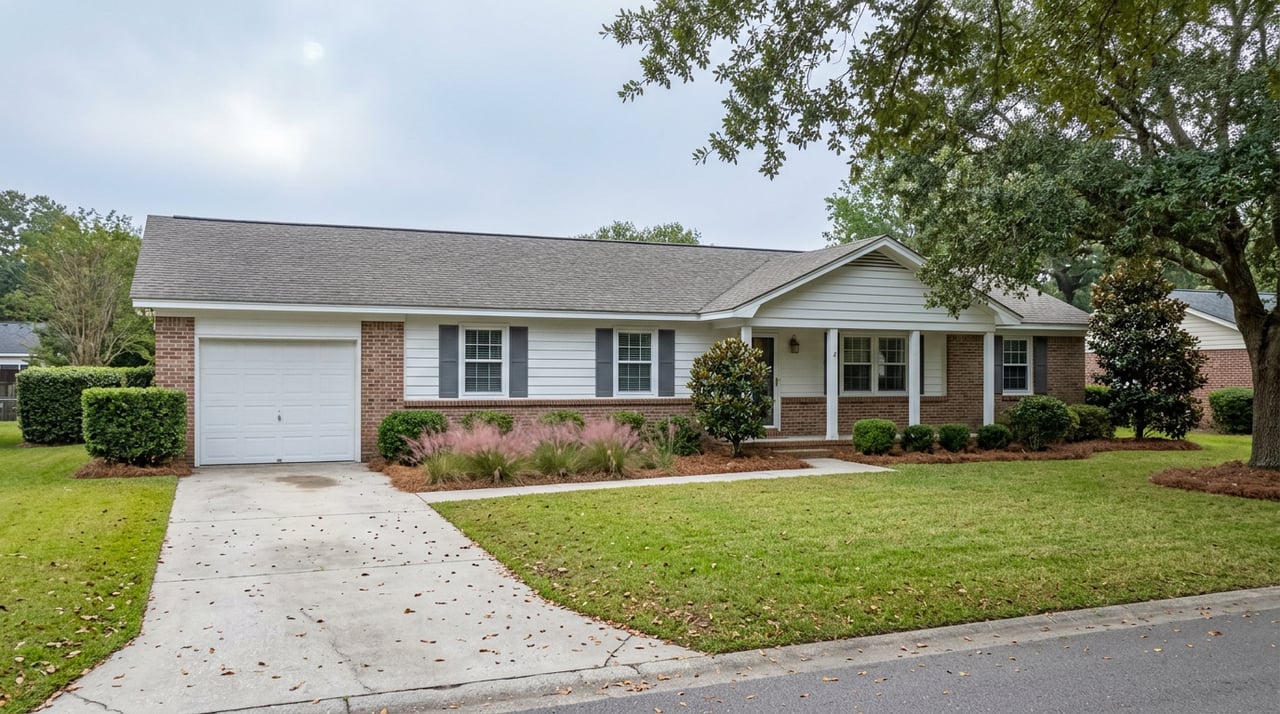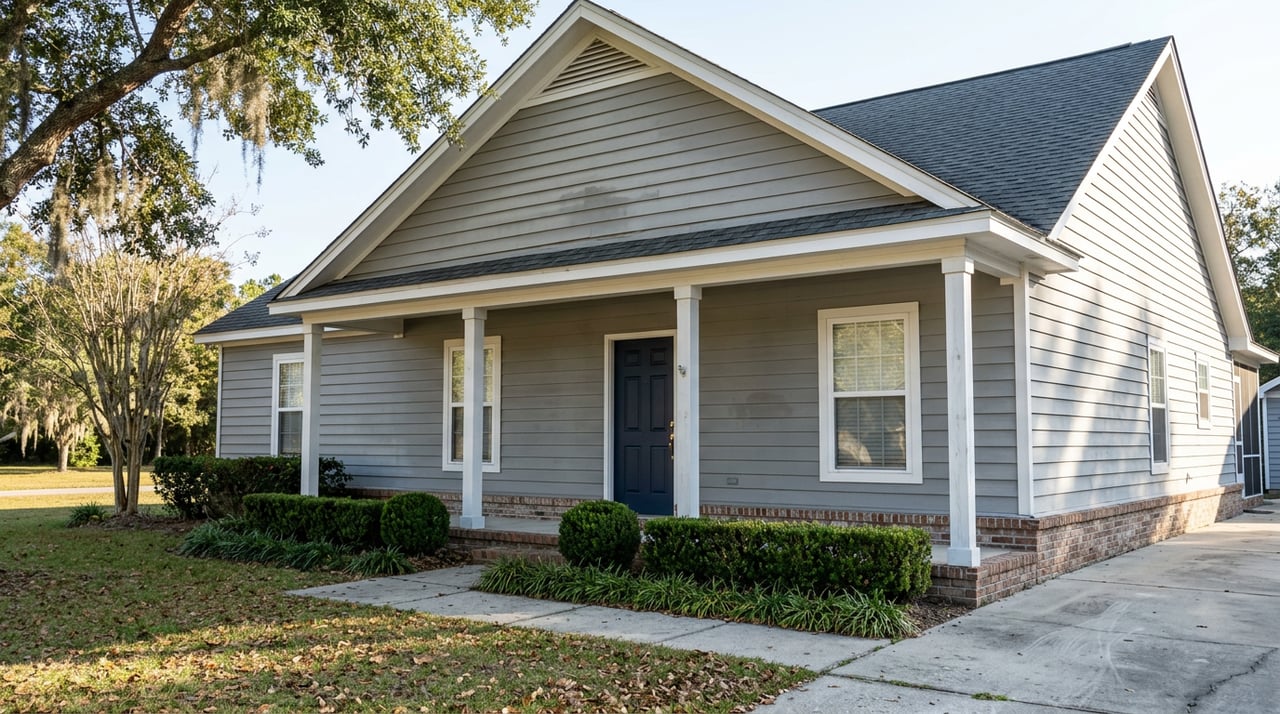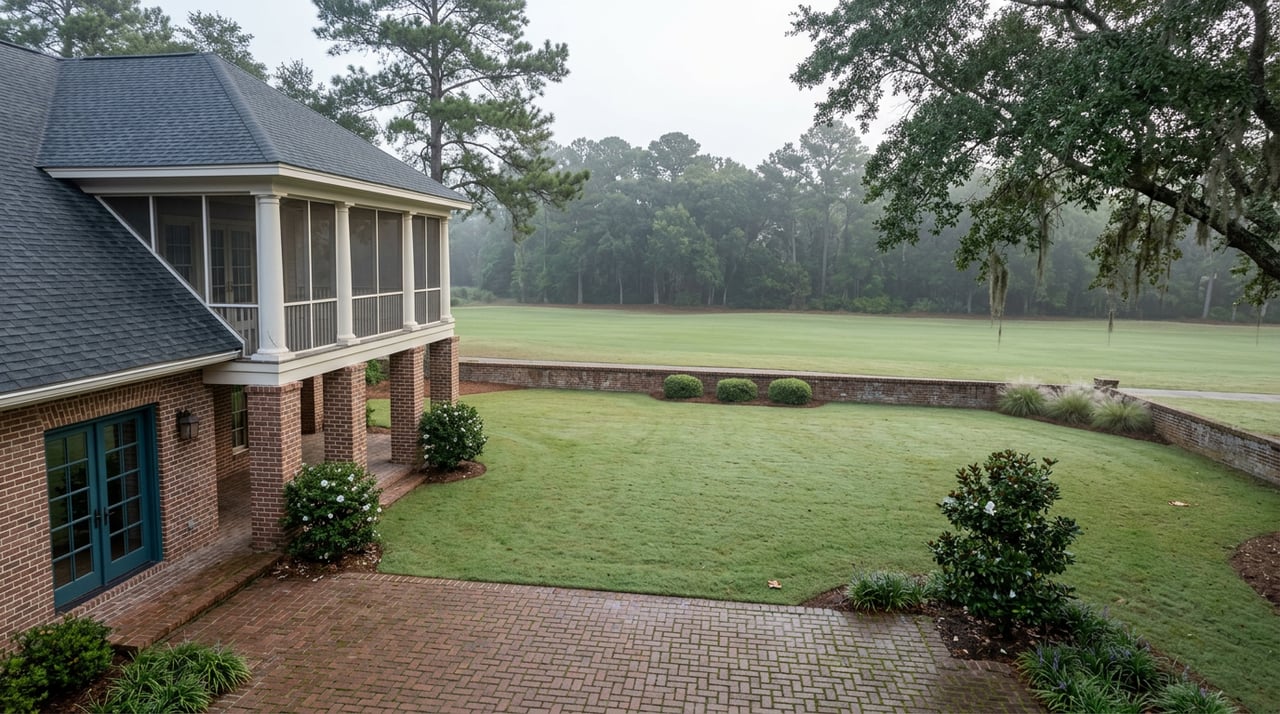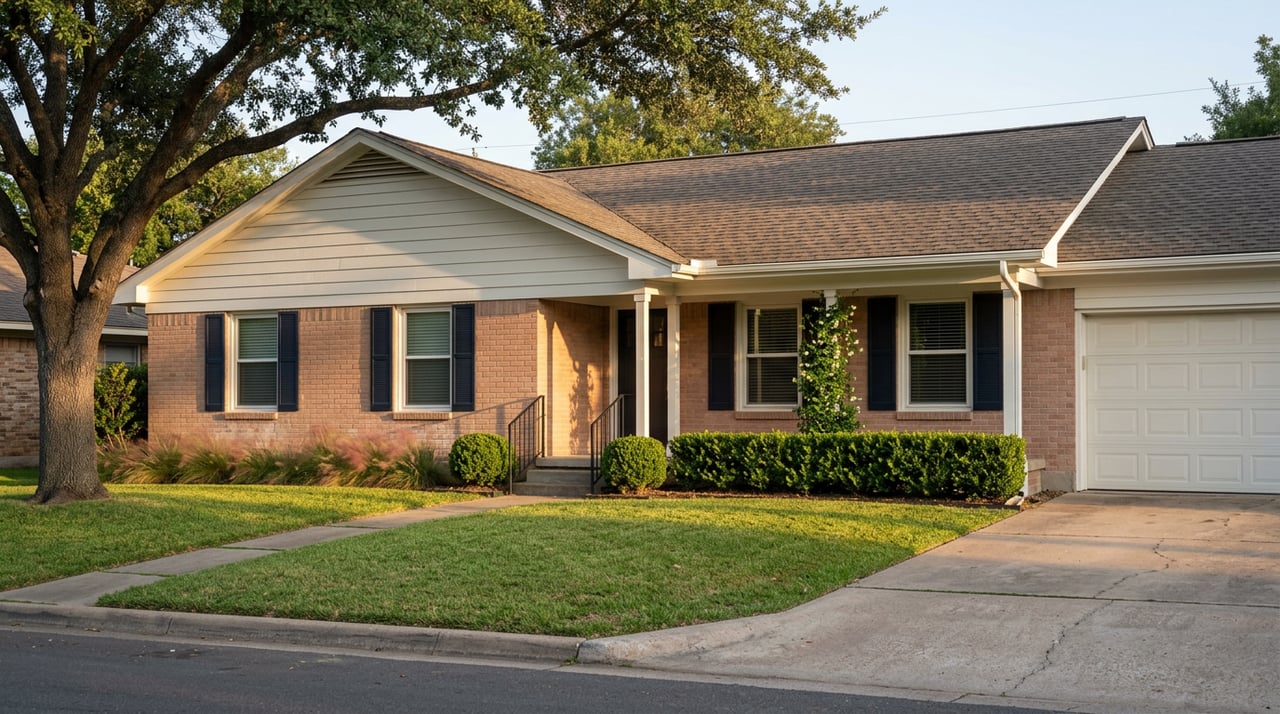
Scroll through 55+ listings in The Ponds and the price spread looks like a mistake. One home lists in the high $300,000s. Another, a few streets over, closes near $700,000. Both carry "The Ponds" in the community name. Both promise the same pitch: single-level living, an active-adult calendar, a gated section inside one of Summerville's most established master-planned neighborhoods.
The instinct is to chalk it up to square footage or finishes. That's only part of the story. The real explanation is that The Ponds contains two separate 55+ communities that don't share a builder, an HOA, or a growth plan, and the cheaper one carries costs that never show up in the list price.
Two Neighborhoods, One Name
Cresswind at The Ponds is built by Kolter Homes and is still under construction, with a stated build-out cap of 600 homes. It offers both new construction and resales dating back to 2015, and it comes with its own dedicated clubhouse, fitness center, pool, and courts built specifically for that section.
Carillon at The Ponds is a different animal. It's a gated enclave built by D.R. Horton that tops out at 56 homes, full stop. No more will ever be built. Every home in Carillon is a resale. Instead of its own amenity package, Carillon residents use the shared facilities across The Ponds, including the saltwater pool, the outdoor amphitheater, and the community's trail network.
On paper, that fixed count should make Carillon the scarcer, pricier option. Fifty-six homes is a small, closed pool competing against a community still adding inventory. That's not how the pricing has actually shaken out.
The Scarcity Logic That Doesn't Hold
As of this spring, active and recently sold listings in Cresswind averaged $531,777, with a range from $387,500 to $692,990 and an average home size around 2,243 square feet. Carillon's resale-only inventory has historically traded well below that band, typically in the high $200,000s to high $300,000s.
Basic scarcity would predict the opposite. A community that will never grow past 56 homes should trade at a premium to one still adding rooftops. Instead, the fixed-supply community is the discount option, and the reason isn't mysterious once you look at what each price actually buys.
Cresswind's homes are newer, larger on average, and come with a clubhouse built for that section alone. Carillon's homes are older, smaller by era, and lean entirely on shared amenities rather than a dedicated package. That accounts for some of the gap. It doesn't account for all of it. The rest comes from a fee structure that most buyers never see until they're deep in a resale contract.
The Fee Most Buyers Don't Find Until They're Under Contract
Cresswind operates on a single HOA that funds its own amenities. Carillon operates on two.
Carillon owners pay annual dues that get split between the Carillon HOA and the separate Ponds Community Association, totaling roughly $975 a year combined. On top of that recurring cost, buyers closing on a home in Carillon pay two separate one-time transfer fees, one for $950 and another for $375, both due at closing to the two different entities.
That's not a single line item a buyer can budget around in advance. It's two associations, two sets of covenants, and two transfer fees stacked at the closing table for a community that, on the surface, looks like the more affordable of the two 55+ options in The Ponds. For a buyer on a fixed retirement income comparing sticker prices, that stacked structure is exactly the kind of cost that erodes the discount they thought they were getting.
The Covenant Detail Worth Reading Before You Write an Offer
There's a second detail buried in Carillon's covenants that's easy to miss if you're assuming both communities enforce the same age rule the same way. Carillon's governing documents allow up to 20 percent of residents to be under 55, with the only hard floor being that no one under 21 may reside there full time.
That 20 percent threshold isn't an arbitrary number picked by a homeowners board. It tracks the standard federal allowance under housing law for maintaining a legally recognized age-restricted community, which permits a minority share of units to house someone under the qualifying age while the development as a whole still qualifies as 55-and-older housing. In practice, it means a buyer moving into Carillon for an age-restricted, adult-focused environment could end up with a neighbor well under 55 living next door, something that isn't spelled out on a listing sheet and only shows up if you read the covenants before you write an offer.
None of this makes Carillon a worse purchase. It makes it a different purchase, with a different set of documents to review before earnest money changes hands. The same advice holds for Cresswind: covenants, dues schedules, and age-restriction terms should be confirmed directly with current HOA documentation rather than assumed from a neighboring section, since terms are set independently by each community's board.
What This Means If You're Comparing the Two
Anyone shopping "55+ in The Ponds" is really choosing between two products that happen to sit inside the same 2,200-acre master plan, roughly half of which is permanently preserved conservancy with more than 20 miles of shared trails, a lake for fishing and kayaking, and a nonprofit conservancy organization that runs programming across the whole community. Both communities' residents draw on that shared backdrop regardless of which HOA they're paying into.
Past that shared setting, the choice comes down to what kind of cost structure fits your plans. Cresswind means a single HOA, a still-growing inventory of new and recent construction, and a clubhouse built specifically for that section, at a higher entry price. Carillon means a smaller, closed community of exactly 56 homes, older construction, and a lower sticker price offset by two HOA relationships and two transfer fees at closing instead of one.
Buyers who stop at the headline price on a portal will see Carillon as the bargain and Cresswind as the premium option. Buyers who read the closing disclosure and the covenants see a more complicated trade: lower monthly cost against a stacked fee structure, versus higher monthly cost against a simpler one. Neither answer is wrong. The mistake is assuming the two communities are interchangeable just because they share a name.
If you're weighing Cresswind against Carillon, or trying to figure out what either community's current HOA documents actually say before you make an offer, Andrea Ulmer can walk through both fee schedules and pull current listings in each section so you're comparing real numbers instead of list prices. Reach out to request a free home valuation or consultation before you write that offer.
A Few Questions Worth Asking
Does the 20 percent under-55 allowance in Carillon apply the same way in Cresswind? Not necessarily. Each community's covenants are set independently by its own HOA board. Confirm the specific age-restriction language for whichever section you're considering rather than assuming both communities use identical terms.
Can I buy new construction in Carillon? No. Carillon is fully built out at 56 homes and every available purchase is a resale. New construction in The Ponds' age-restricted sections is currently limited to Cresswind, which is still building toward its 600-home cap.
Do Carillon's dual HOA dues replace or add to property taxes? They're separate from property taxes entirely. The $975 combined annual dues and the $950 and $375 transfer fees are HOA and community association charges, paid in addition to whatever Dorchester County assesses in property tax on the home.